
How the Brain Solves Simple vs. Complex Math Problems
Different parts of the brain handle math depending on whether we recall facts or compute new answers.

Introduction:
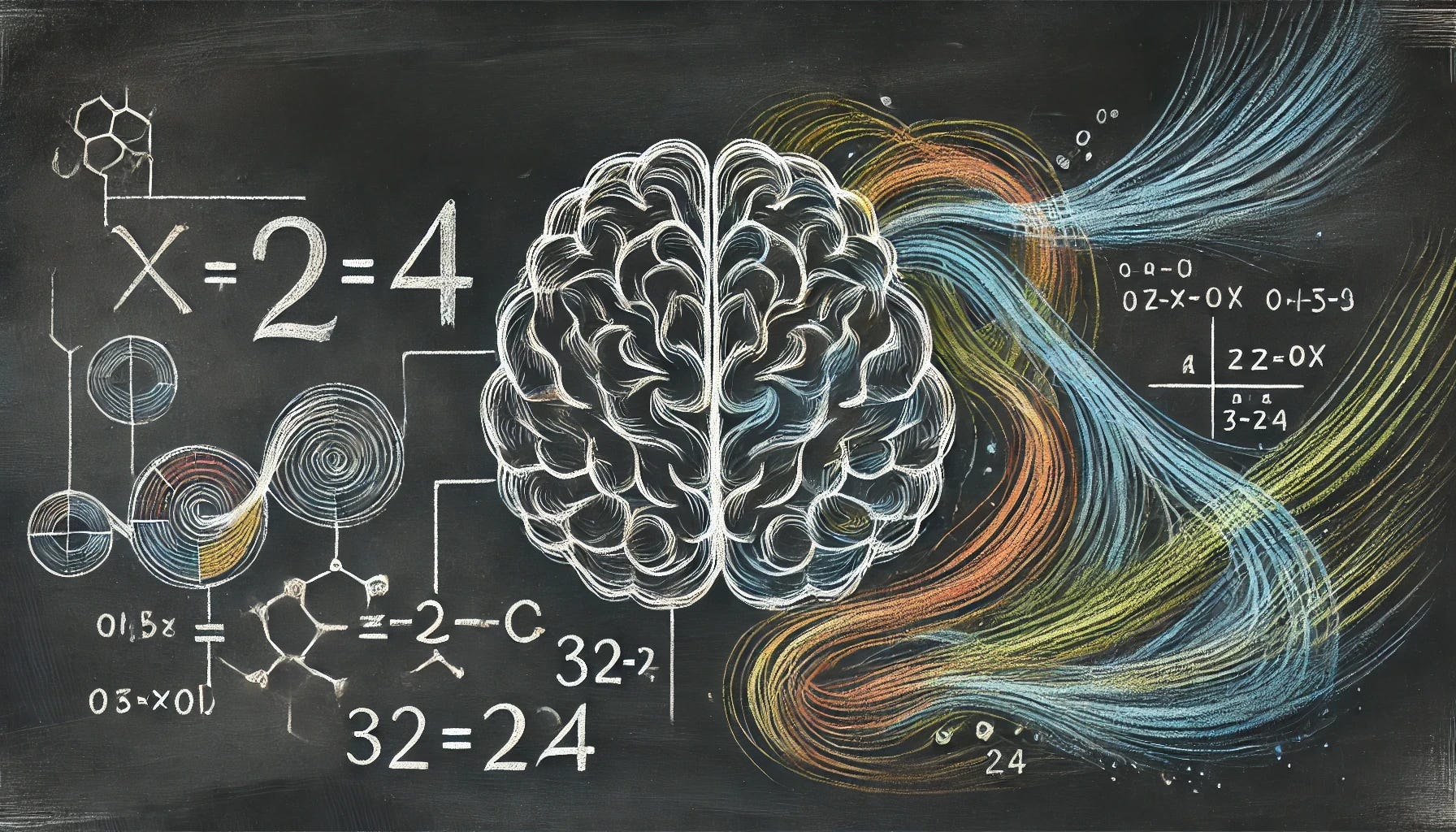
Have you ever wondered why simple math facts feel automatic, while complex calculations require effort? This study used brain imaging to explore how the brain processes basic arithmetic (like 3 × 4) compared to complex multi-digit calculations (like 32 × 24). The findings reveal that different neural networks support fact retrieval vs. step-by-step computation, shedding light on how we learn and apply math skills. Understanding these differences can help educators design strategies that strengthen both types of thinking.
Keep reading with a 7-day free trial
Subscribe to NeuroEducation to keep reading this post and get 7 days of free access to the full post archives.